Fluid dynamic “Vortex Gravitation” Model — derives Kepler’s Laws for Gravitation

Fluid dynamic “Vortex Gravitation” Model — derives Kepler’s Laws for Gravitation

Since the Gravitational Vortex has been modeled as a fluid dynamic “Gaseous Aether” it would make more since to derive a relation for Kepler’s Laws for Gravitation, using the mechanics and mathematics of a fluid.

Using the mathematical mechanics of Daniel Bernoulli’s Hydrodynamic Theorems, and the concepts of Steven Rado’s Aethro-Kinematic/Dynamic Ideal “Aether Gas” theory, Kepler’s Laws for Gravitation are derived; and  the results predict the “Aether Gaseous” “Gravitational Vortex” that spins or rotates, and has radial, tangential, and orthogonal components.

Below, complements of Wiki: Propagation of a transverse spherical wave in a two (2) dimensional gradient gravitational field grid.

Starting with the Bernoulli Equation for an Inertial Mass body in uniform motion in a rotating fluid is described below.

Bernoulli Total Pressure Conservation Equation

{P_{Pressure-Static}} \,\, + \,\, \frac{1}{2}{\rho_{Net}}\,{|\vec{v}|^2_{CM}} \,\,\, = \,\,\,\,  Constant   \,\,\,\,----> \,\, \frac{kg}{m\,\,s^2}

Where,

Static Pressure of Fluid{P_{Pressure-Static}}   \,\,\,\,----> \,\, \frac{kg}{m\,\,s^2}

Inertial Mass Density{\rho_{Net}} \,\,\, = \,\,\, \frac{m_{Net}}{V_{olume}} \,\,\, = \,\,\, \frac{{m_{1}} + {m_{2}} + {m_{3}} + ...... + {m_{N}}}{\frac{4\pi}{3}\,\,{r^3}}   \,\,\,\,----> \,\, \frac{kg}{m^3}

Average Rectilinear Velocity of Center of Mass of Fluid particles

 {|\vec{v}|_{CM}} \,\,-->\,\, \frac{m}{s}

{|\vec{v}|^2_{CM}} \,\, = \,\, \frac{(\displaystyle\sum_{i=1}^N {m_{i}}{v_{i}})^2}{m_{Net}^2} = \frac{ ({m_{1}}{v_{1}} + {m_{2}}{v_{2}} + {m_{3}}{v_{3}} + ...... + {m_{N}}{v_{N}})^2}{ ({m_{1}} + {m_{2}} + {m_{3}} + ...... + {m_{N}})^2 }\,\,----> \,\, \frac{m^2}{s^2}

Keeping the Inertial Mass Density ({\rho_{Net}}) constant for an isolated fluid system and taking the differential of both sides of the above equation.

Letting the Pressure change ({dP_{Pressure-Static}}) with Velocity changes ({d|\vec{v}|_{CM}}) yields.

{dP_{Pressure-Static}} \,\, + \,\, {\rho_{Net}}\,{|\vec{v}|_{CM}} \,\, {d|\vec{v}|_{CM}} \,\,\, = 0     \,\,\,\,----> \,\, \frac{kg}{m\,\,s^2}

{dP_{Pressure-Static}} \,\, = \,\, {-}{\rho_{Net}}\,{|\vec{v}|_{CM}} \,\, {d|\vec{v}|_{CM}}  \,\,\,\,----> \,\, \frac{kg}{m\,\,s^2}

Next, introducing the”Pressure Gradient” (\frac{dP_{Pressure-Static}}{dr}) of the fluid vortex flow field which is defined as the change in pressure with distance, as described by the equation below:

Pressure Gradient of Vortex Fluid Field

\frac{dP_{Pressure-Static}}{dr} \,\, = \,\, {-}{\rho_{Net}}\,{|\vec{v}|_{CM}} \,\, \frac{d|\vec{v}|_{CM}}{dr}  \,\,\,\,----> \,\, \frac{kg}{m^2\,\,s^2}

Next, introducing Circulation Force ({F_{Force}}) which is equal to the centripetal or centrifugal force which is a constant related to the change in distance with pressure which is the “Pressure Gradient” of the fluid flow field; and likewise is a constant related to the velocity changes with distance.

Below, complements of Wiki: Propagation of a transverse spherical wave in a two (2) dimensional gradient gravitational field grid.

Circulation Force of Vortex Fluid Field

{F_{Force}} \,\,\, = \,\,\, \frac{m_{Net}\,\,{|\vec{v}|^2_{CM}}}{\vec{r}} \,\,\, = \,\,\, {V_{olume}}\,\,\frac{dP_{Pressure-Static}}{dr}  \,\,\,\,----> \,\, \frac{kg\,\,m}{s^2}

{F_{Force}} \,\,\, = \,\,\, \frac{m_{Net}\,\,{|\vec{v}|^2_{CM}}}{\vec{r}} \,\,\, = \,\,\, {-}({V_{olume}} \,\, {\rho_{Net}})\,{|\vec{v}|_{CM}} \,\, \frac{d|\vec{v}|_{CM}}{dr}  \,\,\,\,----> \,\, \frac{kg\,\,m}{s^2}

The Inertial Mass and Density equal, ({m_{Net}} \,\, = \,\, {V_{olume}} \,\, {\rho_{Net}})

Circulation Force of Vortex Fluid Field

{F_{Force}} \,\,\, = \,\,\, \frac{m_{Net}\,\,{|\vec{v}|^2_{CM}}}{\vec{r}} \,\,\, = \,\,\, {-}{m_{Net}} \,{|\vec{v}|_{CM}} \,\, \frac{d|\vec{v}|_{CM}}{dr}  \,\,\,\,----> \,\, \frac{kg\,\,m}{s^2}

Dividing both sides of the above equation by the Net Inertial Mass ({m_{Net}}), and rearranging the above yields,

\frac{d\vec{r}}{\vec{r}} \,\, + \,\, \frac{d|\vec{v}|_{CM}}{|\vec{v}|_{CM}} \,\,\, = \,\,\, 0

Integrating both sides of the above equation yields,

\int{\frac{d\vec{r}}{\vec{r}}} \,\, + \,\, \int{\frac{d|\vec{v}|_{CM}}{|\vec{v}|_{CM}}} \,\,\, = \,\,\, \int{0}

Using the logarithmic law and the Integral of a constant law

\ln{\vec{r}} \,\, + \,\, \ln{|\vec{v}|_{CM}} \,\,\, = \,\, {Constant}

\ln{(\vec{r}} \,\, {|\vec{v}|_{CM})} \,\,\, = \,\, {Constant}

The above produces a new constant,

\vec{r} \,\, {|\vec{v}|_{CM}} \,\,\, = {||\vec{r}||} \,\, {||\vec{v}||_{CM}} \,\,\, = \,\, 2({Constant'})

It follows that, the constant becomes equal to Kepler’s Second Law equation which states that planets orbits in gravitational fields in “Equal Areas in Equal Times.”

Where the Constant equals – ({Constant''} \,\, = \,\, {Constant'}\sqrt{1\,\,\, - \,\,\, e^2})

Kepler’s Second Law – Gravitational Angular Momentum & Aerial Velocity – Circular

{(\frac{dA_{rea}}{dt})_{Gravity}} \,\,\, = \,\,\, \frac{L_{Angular-Momentum}}{2{m_{Mass}}} \,\, = \,\,\, {Constant'} \,\,\, = \,\,\frac{1}{2}\, {||\vec{r}||} \,\, {||\vec{v}||_{CM}} —> \frac{\, m^2}{s}

{(\frac{dA_{rea}}{dt})_{Gravity}} \,\,\, = \,\,\, \frac{1}{2}\sqrt{{K_{Gravity}}\,\,{r}} \,\,\, = \,\,\, \frac{1}{2}\sqrt{({m_{Net}\,G})\,\,{r}}  —-> \frac{m^2}{s}

Kepler’s Second Law – Gravitational Angular Momentum & Aerial Velocity – Elliptical

{(\frac{dA_{rea}}{dt})_{Ellipse-Gravity}} \,\,\, = \,\,\,\frac{L_{Angular-Elliptical}}{2{m_{Mass}}} \,\,\, = \,\,\, {Constant''} \,\,\, = \,\,\, \frac{1}{2}{||\vec{r}||} \,\, {||\vec{v}||_{CM}} \,\, \sqrt{1\,\,\, - \,\,\, e^2} —–> \frac{\, m^2}{s}

{(\frac{dA_{rea}}{dt})_{Ellipse-Gravity} \, = \, \frac{1}{2}\sqrt{{K_{Gravity}}\,\,{(r)}\, (1\,\,\, - \,\,\, e^2)}} = \, \frac{1}{2}\sqrt{({m_{Net}\,G})\,\,{(r)}\,\, (1\,\,\, - \,\,\, e^2)} —–> \frac{m^2}{s}

Therefore the Force now becomes

Circulation Force of Vortex Fluid Field

{F_{Force}} \,\,\, = \,\,\, \frac{m_{Net}\,\,{|\vec{v}|^2_{CM}}}{\vec{r}} \,\,\, = \,\,\, \frac{m_{Net}\,\, {(Constant')}^2} {\vec{r}^3}   \,\,\,\,----> \,\, \frac{kg\,\,m}{s^2}

{F_{Force}} \,\,\, = \,\,\, \frac{m_{Net}\,\,{|\vec{v}|^2_{CM}}}{\vec{r}} \,\,\, = \,\,\, \frac{m_{Net}\,\, {(\frac{dA_{rea}}{dt}_{Gravity})}^2} {\vec{r}^3}  \,\,\,\,----> \,\, \frac{kg\,\,m}{s^2}

{F_{Force}} \,\,\, = \,\,\, \frac{{m_{Net}}\,\,K_{Gravity}}{\vec{r^2}} \,\,\, = \,\,\, \frac{m^2_{Net}\,\,G}{\vec{r^2}}  \,\,\,\,----> \,\, \frac{kg\,\,m}{s^2}

Kepler’s First Law – (Space)

We also know from Kepler’s First law that the planets or bodies in gravitational fields orbit in elliptical and not circular orbits.

Semi-Major Radius – ({r})
Semi-Minor Radius – ({r_{Minor}})
elliptical eccentricity – ({e})

{r_{Minor}} = {r}\,\, \sqrt{1\,\,\, - \,\,\, e^2}  \,\,\,\,----> \,\, {m}

The Area of the Circular Orbit is given by

{A_{rea-Circle}} = \pi \,{r^2}\,\, \,\,\,\,----> \,\, {m^2}

The Area of the Elliptical Orbit is given by

{A_{rea-Ellipse}} = \pi \,{r}{r_{Minor}}\,\, = \pi \,{r^2}\,\, \sqrt{1\,\,\, - \,\,\, e^2} \,\,\,\,----> \,\, {m^2}

Kepler’s First Law & Second Law – (Time)

The Orbital Period of the fluid particles in a “Gravitational Vortex” spin or rotate around the center of the vortex equal areas in equal times.

Orbital “Time” Period – ({T_{Period}}) is defined

{T_{Period}} \,\,\, = \,\,\, \frac{A_{rea-Ellipse}}{(\frac{dA_{rea}}{dt})_{Ellipse-Gravity}}\,\,=\,\,\, \frac{A_{rea-Circle}}{(\frac{dA_{rea}}{dt})_{Gravity}} \,\,  —–> {s}

{T_{Period}} \,\,\,=2\pi \,\,\sqrt{\frac{r^3}{m_{Net}\,G}}\,\,\,=\,\,\, \frac{2\pi \,\,{r}}{{||\vec{v}||_{CM}}} \,\,\,  —–> {s}

Kepler’s Third Law – Evolution Attraction Rate

{K_{Gravity}}= \, 4\pi^2 (\frac{r^3_{Schwarzschild}}{T^2_{Schwarzschild}}) \, = \, 4\pi^2 (\frac{r^3_{1}}{T^2_{1}}) = 4\pi^2 (\frac{r^3_{2}}{T^2_{2}})= ...=4\pi^2 (\frac{r^{3}}{T^{2}_{Period}}) \,

{K_{Gravity}}\,\,\, = \,\,\, \frac{(2{(\frac{dA_{rea}}{dt})_{Gravity}})^2}{r} \,\,\, = \,\,\, \frac{(2{(\frac{dA_{rea}}{dt})_{Ellipse-Gravity}})^2}{{r}\, (1\,\,\, - \,\,\, e^2)} \,\,\,

{K_{Gravity}} \,\, = {m_{Net}}\,G \, \, = ( {m_{1}} + {m_{2}} + {m_{3}} + ...... + {m_{N}})G \,\,   ---> \frac{m^3}{s^2}

Concluding, Kepler’s Laws of the “Gravitational Vortex” using Fluid Mechanics have been derived.

************************************************************

Citation

Cite this article as:

Robert Louis Kemp; The Super Principia Mathematica – The Rage to Master Conceptual & Mathematical Physics – The General Theory of Relativity – “Fluid dynamic “Vortex Gravitation” Model — derives Kepler’s Laws for Gravitation– Online Volume – ISBN 978-0-9841518-2-0, Volume 3; July 2010

************************************************************

Author: Robert Louis Kemp

http://www.SuperPrincipia.com

Posted in The General Theory of Relativity | Tagged , , , , , , , | 10 Comments

“Vortex Gravitation” Model — Gradient Gravitational Field — Kepler’s Third Law is a System Body Constant

“Vortex Gravitation” Model — Gradient Gravitational Field — Kepler’s Third Law is a System Body Constant

The “Inertial Gravitation Evolutionary Attraction Rate” ({K_{Gravity}}) is constant throughout the total extent of the “gradient gravitational field” and  is a parameter that quantifies and generalizes an Inertial Mass Gradient Gravitational Field, and describes a specific quantity of the Gravitational Attraction that is directly proportional to the Net Inertial Mass of the Gravitational Field Vortex system body.

The “Gravitational Vortex” is modeled as being comprised of an infinite series of Euclidean Spherical Volumes of “Gravitational Potential” of the “Gradient Gravitational Field” which are spherical layers or shells of “Gravitational Potential Energy” which originate with Schwarzschild Radius ({r_{Schwarzschild}}) Black Hole Event Horizon, as described by the following equation and shown in the image below.

Schwarzschild Radius – (Scalar)

{r_{Schwarzschild}} \,\, = \frac{2\,{m_{Net}}\,G}{c^2_{Light}} \,  ---> {m}

The Inertial Gravitation Evolutionary Attraction Rate – (Scalar)

{K_{Gravity}} \,\, = {m_{Net}}\,G \, \, = ( {m_{1}} + {m_{2}} + {m_{3}} + ...... + {m_{N}})G \,\,   ---> \frac{m^3}{s^2}

{K_{Gravity}}= \, 4\pi^2 (\frac{r^3_{Schwarzschild}}{T^2_{Schwarzschild}}) \, = \, 4\pi^2 (\frac{r^3_{1}}{T^2_{1}}) = 4\pi^2 (\frac{r^3_{2}}{T^2_{2}})= ...=4\pi^2 (\frac{r^{3}}{T^{2}_{Period}}) \,

Next, any and every “Vortex” has rotational flow in three dimensions of space and one dimension of time. The vortex is modeled as having three independent components: Radial, Tangential, and Orthogonal.

Below is described some various components that describe the “Inertial Mass Gravitational Spherical Sink Vortex”

Gravitational Spherical Sink Vortex – Radial Vortex Parameters (Terms)

1) Semi-Major Radius Distance – – > {r} —–> {m}

It is well known from Kepler’s First law that the planets or bodies in gravitational fields orbit in elliptical and not circular orbits.

Semi-Major Radius – ({r})
Semi-Minor Radius – ({r_{Minor}})
elliptical eccentricity – ({e})

{r_{Minor}} = {r}\,\, \sqrt{1\,\,\, - \,\,\, e^2} \,\,\,\,----> \,\, {m}

2) Inertial Mass Gravitational Evolutionary Attraction Rate – – >

{K_{Gravity}} \, = \, {m_{Net}\,G} \, = 4\pi^2 (\frac{r^{3}}{T^{2}_{Period}}) \, \,  —> \frac{m^3}{s^2}

3) Inertial Mass Gravitational Acceleration – – >

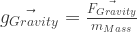
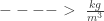
{g_{Gravity}} \, = \, \frac{K_{Gravity}}{r^2}\, = \, \frac{m_{Net}\,G}{r^2} —–> \frac{m}{s^2}

4) Inertial Mass Gravitational Force – – >

{F_{Gravity-Force}} \, \, = \, \frac{m_{Mass}\,{K_{Gravity}}}{r^2} \, = \, \frac{m_{Mass}\,{m_{Net}}\,G}{r^2} \, = \, \, {m_{Mass}}{g_{Gravity}} —> \frac{kg m}{s^2}

Gravitational Spherical Sink Vortex – Tangential Vortex Parameters (Terms)

1) Gravitational Tangential “Orbital” Velocity – – >

{v_{Gravity}} \, = \, \sqrt{\frac{K_{Gravity}}{r}} = \, \sqrt{\frac{m_{Net}\,G}{r}}    ---> \frac{m}{s}

2) Gravitational Vorticity “Vortical” Velocity – – >

{\Omega_{G-Vorticity}} \, = \, \sqrt{\frac{K_{Gravity}}{r^5}} \, = \, \sqrt{\frac{m_{Net}\,G}{r^5}} —-> \frac{1}{m\, s}

Gravitational Spherical Sink Vortex – Orthogonal Parameters (Terms)

1) Gravitational Angular Velocity – – >

{\omega_{Gravity}} \, = \, \sqrt{\frac{K_{Gravity}}{r^3}} \, = \, \sqrt{\frac{m_{Net}\,G}{r^3}} —> \frac{1}{s}

2) Gravitational Aerial Velocity – – >

{(\frac{dA_{rea}}{dt})_{Gravity}} \, = \, \frac{1}{2}\sqrt{{K_{Gravity}}\,\,{r}} \, = \, \frac{1}{2}\sqrt{({m_{Net}\,G})\,\,{r}} —–> \frac{m^2}{s}

3) Gravitational Angular Momentum – – >

{L_{Angular-Momentum}} \, \, = \,\, 2{m_{Mass}}\,\,[{(\frac{dA_{rea}}{dt})_{Gravity}}] —–> \frac{kg\, m^2}{s}

Gravitational Spherical Sink Vortex – Cross Product Rules

Wiki – Cross Product Rules

Gravitational Tangential “Orbital” Velocity – (Tangential Vector)

\vec{v_{Gravity}} \,\, = \, \, \vec{r} \,\, \times \,\, \vec{\omega_{Gravity}} —–> \frac{m}{s}

\vec{v_{Gravity}} \,\, = \, \, {r^2} \,\, \vec{\Omega_{Gravity}} —–> \frac{m}{s}

Gravitational Acceleration – (Radial Vector)

\vec{g_{Gravity}} \,\, = \, \, \vec{\frac{F_{Gravity-Force}}{m_{Mass}}} = \, \, \vec{\omega_{Gravity}} \,\, \times \,\, \vec{v_{Gravity}} —–> \frac{m}{s^2}

\vec{g_{Gravity}} \,\, = \, \, \vec{\frac{F_{Gravity-Force}}{m_{Mass}}} = \, \, {\omega^2_{Gravity}} \,\, \vec{r} —–> \frac{m}{s^2}

Gravitational Aerial Velocity – (Orthogonal Vector)

\vec{(\frac{dA_{rea}}{dt})_{Gravity}} \,\, = \,\, \vec{\frac{L_{Angular-Momentum}}{2\,m_{Mass}}} \,\, = \, \, \frac{1}{2}(\vec{r} \,\, \times \,\, \vec{v_{Gravity}}) —–> \frac{m^2}{s}

\vec{(\frac{dA_{rea}}{dt})_{Gravity}} \,\, = \,\, \vec{\frac{L_{Angular-Momentum}}{2\,m_{Mass}}} \,\, = \, \, \frac{1}{2}({r^2} \,\, \vec{\omega_{Gravity}}) —–> \frac{m^2}{s}

Gravitational Vorticity “Vortical” Velocity – (Tangential Vector)

\vec{\Omega_{G-Vorticity}} \, = \, \frac{\vec{v_{Gravity}}}{r^2} \,\, = \, \, \frac{\vec{r} \,\, \times \,\, \vec{\omega_{Gravity}}}{r^2} —–> \frac{1}{m\,s}

\vec{\Omega_{G-Vorticity}} \, = \, \frac{\vec{\omega_{Gravity}}}{r} \,\, = \, \, \frac{\vec{r} \,\, \times \,\, \vec{v_{Gravity}}}{r^3} —–> \frac{1}{m\,s}

Inertial Mass Gravitational Evolutionary Attraction Rate – (Radial Vector)

\vec{K_{Gravity}} \,\, = \, \, 2\vec{(\frac{dA_{rea}}{dt})_{Gravity}} \,\, \times \,\, \vec{v_{Gravity}}   —–> \frac{m^3}{s^2}

\vec{K_{Gravity}} \,\, = \, \, {r^2}\,\,[2\vec{(\frac{dA_{rea}}{dt})_{Gravity}} \,\, \times \,\, \vec{\Omega_{Gravity}}]   —–> \frac{m^3}{s^2}

\vec{K_{Gravity}} \,\, = \, \, 2\vec{(\frac{dA_{rea}}{dt})_{Gravity}} \,\, \times \,\, \vec{r} \,\, \times \,\, \vec{\omega_{Gravity}}   —–> \frac{m^3}{s^2}

\vec{K_{Gravity}} \,\, = \, \, {r^2}\,\,(\vec{g_{Gravity}})   —–> \frac{m^3}{s^2}

The above rules are used to model the Inertial Mass Gravitational Spherical Sink Vortex.

************************************************************

Citation

Cite this article as:

Robert Louis Kemp; The Super Principia Mathematica – The Rage to Master Conceptual & Mathematical Physics – The General Theory of Relativity – ““Vortex Gravitation” Model — Gradient Gravitational Field — Kepler’s Third Law is a System Body Constant– Online Volume – ISBN 978-0-9841518-2-0, Volume 3; July 2010

************************************************************

Author: Robert Louis Kemp

http://www.SuperPrincipia.com

Posted in The General Theory of Relativity | Tagged , , , , , , , | 2 Comments

“Vortex Gravitation” Model — “Gaseous Aether” — Gradient Gravitation Field

“Vortex Gravitation” Model — “Gaseous Aether” — Gradient Gravitation Field

Now, let us return to the “Gravitation Vortex” Model as described in the book series: Super Principia Mathematica – The Rage to Master Conceptual and Mathematical Physics

Earlier in the post I discussed that the “Aether” is another term for the “Vacuum Energy” that permeates all of the “Free Space” or “Space-time” of the “Universe.” The Aether is also described as a real gas that behaves like an ideal gas. The constituents of the “Aether Gas” are the “Aetherons.” And therefore the “Aetherons” are also the constituents of “Space” or “Space-time.”

1) the “Aetherons” exist only pairs. And there is no such thing as a single Aetheron. An Aetheron is an elastic spherical volume of space known as the Q-Sphere, that consists of and Outer Shell Exterior Aetheron, and an Interior to the spherical volume Aetheron; that is in random motion within the interior with an average speed equal to the speed of light. Energy is exchanged when the Interior Aetheron collides with the inner wall of the Exterior Aetheron.

2) The “Aetherons” are not particles nor are they waves, but the “Aetherons” exists in elastic spherical volumes where the radius of the volume is directly proportional to the mass. This also means that the larger the volume of space the more “Aether” or “Aetherons” occupy that volume of space.

3) The larger the liner (radial) “space” or volume “space” the larger the quantity of Aether and the greater the number of Aetherons in that ‘space.” And the larger the Inertial Mass in that space.

4) Inertial Mass (i.e. electons, protons, atoms, planets, suns, galaxies) are modeled as the condensing of the Aetherons into radial, tangential, and orthogonal directions.

In Steven Rado’s “Aether” gas model he uses the term “Sink Vortex” to describe that Gravitation is the procress where the “Aether” is condensing into “mass/matter.” For a description of the mechanics of this “Sink Vortex” model for Gravitation, Rado combined the model of Johannes Kepler’s Third Law, Descartes “Circular Vortex Theory”, and Isaac Newton’s Gravitational Attraction Theory.


The Rado Aether Gas being modeled here is a real gas that behaves like an ideal gas. The “Aetherons” of the Rado Ideal Aether Gas that I am modeling here, are not exactly “particles” nor are they exactly “waves.” Truly the Aetherons are both particle and wave like. The Aetherons of the Aether Gas are not point particles but exist as a single volume of paired elastic units.

The Aetherons of the Aether Gas also interact only with they collide. The Vacuum Energy Aetherons are not particles per se, but that the vacuum is made of Aetherons which exhibit particle and wave type behavior.

I do not think that we can measure a single or a pair of Aetherons. What we can measure is the effect of the motion of the aetherons on matter(mass). The Aetherons in a vortex flow are readily seen and measured as the magnetic field. And the Aetherons in a vortex flow are not seen and not so easy to measure as the gravitational field.

-The Aetherons always come in pairs. This Aetheron pairing could be responsible for the elastic wave behavior?

-The Q-Sphere Aetheron and the interior Aetheron can change places or states

-The Aetherons of the Aether Gas interact only with they collide

-There is an enormous amount of Aetherons that make up a proton, electron, or photon. And yes the electron aetherons do interact in an interlocking way with the protons!

For any Net Inertial Mass body some Aetherons of the vortex that make up that mass body are Isotropic (direction independent and random) and some Aethrons are anisotropic (direction dependent)

I don’t have time to go into the history, but briefley, Rene Descartes proposed a “Circular Aether Vortex Theory’ for Graviatation. Isaac Newton rejected the “Circular Aether Vortex Theory” for Gravitation because Johannes Kepler’s three (3) laws of motion predict “elliptical motion” for gravitation and not “circular motion.” Steven Rado ca.1994 in his book AETHRO-KINEMATICS, returned to the “Aether Vortex” theory agreeing with Newton that Kepler was correct and modified the “Circular Vortex Theory” into a “Spiral Sink Vortex Theory;” and thereby resurrecting Descartes Vortex by applying Kepler laws to a vortex that predicts elliptical motion and not circular motion, returned to the “Aether Vortex” theory agreeing with Newton that Kepler was correct and modified the “Circular Vortex Theory” into a “Spiral Sink Vortex Theory;” and thereby resurrecting Descartes Vortex by applying Kepler laws to a vortex that predicts elliptical motion and not circular motion.

Taking these concepts further in the Super Principia Mathematica, I model a Gaseous Gradient Gravity Field using a new term that I coined “Inertial Gravitation Evolutionary Attraction Rate” denoted by the symbol ({K_{Gravity}} ---> \frac{m^3}{s^2})

This term the “Inertial Gravitation Evolutionary Attraction Rate” ({K_{Gravity}}) is used as a term that describes the general motion in a gradient gravitational field; which is equilavent to a “Non-Inertial Frame” of reference.

1) This term the “Inertial Gravitation Evolutionary Attraction Rate” ({K_{Gravity}}) describes a specific quantity of the Gravitational Attraction that is directly proportional to the mass. Therefore each mass body has its own “Inertial Gravitation Evolutionary Attraction Rate” ({K_{Gravity}}); or vortex.

2) This term the “Inertial Gravitation Evolutionary Attraction Rate” ({K_{Gravity}}) encapulates the following quantities into one term (Net Inertial Mass, Tangential Velocity, Gravitational Acceleration, Aerial Velocity, Angular Velocity, Angular Acceleration, Vorticity, Volume, Space (Distance), and Time).

3) This term the “Inertial Gravitation Evolutionary Attraction Rate” ({K_{Gravity}}) describes a Gravitational Gradient Field, that is made up of concentric spherical volumes of space that extend from some smallest distance or volume in the field out to and infinite distance in the gravity field. The smallest curvature, volume, radius of the gradient field is described by the Schwarzschild Radius ({r_{Schwarzschild}} = \frac{2\,m_{Net}\,G}{c^2_{Light}}); and from the Schwarzschild radius we can get the volume ({Vol = \frac{4\pi{r^3_{Schwarzschild}}}{3}}) and spacetime curvature ({G_{Space}}_{(\theta \phi)}\;=\;{r_{Schwarzschild}}{\Omega_{Map}}_{(\theta \phi)}).

Let me give you a little more detail about the “Inertial Gravitation Evolutionary Attraction Rate” ({\vec{K_{Gravity}}}) is a vector that points in the same direction as the Gravitational Force (\vec{F_{Gravity}}) and the Gravitational Acceleration (\vec{{g_{Gravity}}} = \frac{\vec{F_{Gravity}}}{m_{Mass}}) towards the center of the an Inertial mass body.

Inertial Net Mass = Gravitational Inertial Mass

{m_{Net}} = \frac{K_{Gravity}}{G} = \displaystyle\sum_{i=1}^N {m_{i}} = {m_{1}} + {m_{2}} + {m_{3}} + ...... + {m_{N}} ---> kg

The Inertial Gravitation Evolutionary Attraction Rate – (Vector)

\vec{K_{Gravity}} = m_{Net}G \,\widehat{a_{r}} \, = 4\pi^2 (\frac{r^{3}}{T^{2}_{Period}}) \,\,\widehat{a_{r}} \, ---> \frac{m^3}{s^2}

The Inertial Gravitation Evolutionary Attraction Rate – (Scalar)

{K_{Gravity}}\;=\;( {m_{1}} + {m_{2}} + {m_{3}} + ...... + {m_{N}})G ---> \frac{m^3}{s^2}

{K_{Gravity}}\;=\; 4\pi^2 (\frac{r^3_{Schwarzschild}}{T^2_{Schwarzschild}}) \, = \, 4\pi^2 (\frac{r^{3}}{T^{2}_{Period}}) \, ---> \frac{m^3}{s^2}

(Mass & Energy) = (Minimum Space-time Field Gradient) = (Maximum Space-time Field Gradient)

Now the above general gradient gravity field equation is similar to the Einstein Field Equation in that you have “Matter and Energy” on the left hand side of the equation and “Space and Time” on the right hand side of the equation. This means that anywhere you localize space and time into a specific volume you also have mass and energy in that volume.

The above Inertial Gravitation Evolutional Attraction Rate predicts that the larger the volume or the radius of the gradient gravity field the slower the rotation of mass as well as the aetherons in the gravity field.

The Einstein Field Equation below also has “Matter and Energy” on the left hand side of the equation and “Space and Time” on the right hand side of the equation.

{dG_{Space}}_{(\theta \phi)}\;=\;2\pi [\frac{{dT_{Energy}}_{(\theta \phi)}}{\frac{1}{4} ( \frac{c^4_{Light}}{G})}]\;=\;{[{dR_{(\theta \phi)}}\;-\;\frac{{dg_{Vol}}_{(\theta \phi)}}{S^2_{Expansion}}]} ---> m

The Inertial Gravitation Evolutiionary Attraction Rate – (Scalar)

{K_{Gravity}} \, \, = \, \, {m_{Net}}G \, \, = \, \, {r^2}\,{g_{Gravity}} \, \, = \, \, {r}\,{v^2_{Gravity}} ---> \frac{m^3}{s^2}

Newtonian Gravitational Force Law:

{F_{Gravity-Force}} = \frac{m_{Mass}{K_{Gravity}}}{r^2} = \frac{m_{Mass} m_{Net} G}{r^2} = \frac{m_{Mass}(4\pi^2 (\frac{r^{3}}{T^{2}_{Period}}))}{r^2} ---> \frac{kg m}{s^2}

{F_{Gravity-Force}} = \frac{m_{Mass}{v^2_{Gravity}}}{r} = {m_{Mass}}{g_{Gravity}} ---> \frac{kg m}{s^2}

************************************************************

Citation

Cite this article as:

Robert Louis Kemp; The Super Principia Mathematica – The Rage to Master Conceptual & Mathematical Physics – The General Theory of Relativity – “Vortex Gravitation” Model — “Gaseous Aether” — Gradient Gravitation Field– Online Volume – ISBN 978-0-9841518-2-0, Volume 3; July 2010

************************************************************

Author: Robert Louis Kemp

http://www.SuperPrincipia.com

Posted in The General Theory of Relativity | Tagged , , , , , , , | 3 Comments

“Vortex Gravitation” Model – Einstein Field Equation – Differential Mathematical Form

“Vortex Gravitation” Model – Einstein Field Equation – Differential Mathematical Form

What makes the Inertial Mass “Gravitation Vortex” model very powerful and useful is that it predicts Isaac Newton’s Graviation Laws and Einstein’s General Theory of Relativity.

The “Gravitation Vortex” model is described by the equations of General Relativity:

The vortex model must obey the Ideal Gas Law which satisfies the Einstein Field Equation of General Relativity

Equations of General Relativity in “Differential Form” Mathematical Mechanics

The General Relativity Gravitational Field Equation describes a “Gravitational Vortex” where the gradient Gravitational Field Potential is modeled as a Euclidean Sphere where the differential “Map/Patch/Manifold Geodesic Arc Length” ({dG_{Space}}_{(\theta \phi)}) is the source of curvature of each gravitational gradient field potential and is a differential “Map/Patch/Manifold Geodesic Arc Length” in three (3) dimensional space ({dx}, {dy}, {dz}), one dimension of time ({dt_{time}}), and two (2) dimensional angles (d\theta_{Latitude}, d\phi_{Longitude}), and is directly proportional to the differential “Stress Energy” ({dT_{Energy}}_{(\theta \phi)}) of a gravity vortex system body.

Source of Curvature of Spherical Gravitational Field Potential ― Map/Patch/Manifold “Field Equation” – Differential – Geodesic Arc Length Distance

{dG_{Space}}_{(\theta \phi)} \;=\; {r}{d\Omega_{Map}}_{(\theta \phi)}\; ---> m

{dG_{Space}}_{(\theta \phi)} \;=\;[{dR_{(\theta \phi)}}\;-\;{dg_{Vol}}_{(\theta \phi)}(\frac{R_{Heat}}{2}\;-\;{\Lambda_{Einstein}})] ---> m

{dG_{Space}}_{(\theta \phi)}\;=\;2\pi [\frac{{dT_{Energy}}_{(\theta \phi)}}{\frac{1}{4} ( \frac{c^4_{Light}}{G})}]\;=\;{[{dR_{(\theta \phi)}}\;-\;\frac{{dg_{Vol}}_{(\theta \phi)}}{S^2_{Expansion}}]} ---> m

{dG_{Space}}_{(\theta \phi)}\;=\;2\pi [\frac{{dT_{Energy}}_{(\theta \phi)}}{F_{Dark-Force}}] ---> m

“Differential” Map/Patch/Manifold Angle

{d\Omega_{Map}}_{(\theta \phi)}\;=\;\sqrt{d\theta^2_{Lat}\;+\;d\phi^2_{Lon} (sin^2\theta_{Lat})} ---> radians

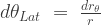
“Differential” Latitude Angle

{d\theta_{Lat}}\;=\;\frac{dr_{\theta}}{r} ---> radians

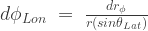
“Differential” Longitude Angle

{d\phi_{Lon}}\;=\;\frac{dr_{\phi}}{r(sin\theta_{Lat})} ---> radians

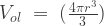
Thus, there is a difference between the Euclidean volume ({V_{ol}}\;=\;(\frac{4\pi r^3}{3})) enclosed by this surface of a sphere, and the differential Map/Patch/Manifold Surface Volume ({dg_{Vol}}_{(\theta \phi)}) segments of a sphere. The differential Map/Patch/Manifold Surface Volume ({dg_{Vol}}_{(\theta \phi)}) is two (2) dimensional expressed as a function of geodesic arc length, angle, and area, in three (3) dimensions given by the following equations.

Euclidean Spherical Volume

{V_{ol}}\;=\;(\frac{4\pi r^3}{3}) ---> {m^3}

“Differential” Volume Element of Sphere

{dg_{Vol}}_{(\theta \phi)}\;=\;2(\frac{V_{ol}}{4\pi^2}){\Omega_{Map}}_{(\theta \phi)}{d\Omega_{Map}}_{(\theta \phi)} ---> {m^3}

{dg_{Vol}}_{(\theta \phi)}\;=\;2(\frac{r^3}{3\pi}){\Omega_{Map}}_{(\theta \phi)}{d\Omega_{Map}}_{(\theta \phi)} ---> {m^3}

{dg_{Vol}}_{(\theta \phi)}\;=\;(\frac{2r}{3\pi}){G_{Space}}_{(\theta \phi)}{dG_{Space}}_{(\theta \phi)} ---> {m^3}

The General Relativity Einstein field equation determines the metric tensor of spacetime for a given arrangement of stress-energy in the spacetime. The Einstein field equations describe the fundamental force of gravitation as a curved spacetime caused by matter and energy.

The differential “Stress” Energy ({dT_{Energy}}_{(\theta \phi)}) describes curved spacetime which includes matter and energy includes both energy and momentum densities as well as stress pressure and shear pressure. Drawing further upon the analogy with Newtonian gravity, it is natural to assume that the field equation for gravity describes this differential “Stress” Energy ({dT_{Energy}}_{(\theta \phi)}) as the source of gravity on the surface of a spherical gravitational field potential.

Ideal Gas Equation for Spacetime – Differential – Stress Energy

{dT_{Energy}}_{(\theta \phi)}\;=\; ({F_{Dark-Force}})[\frac{{dG_{Space}}_{(\theta \phi)}}{2\pi}] ---> \frac{kgm^2}{s^2}

{dT_{Energy}}_{(\theta \phi)}\;=\; \frac{1}{4} ( \frac{c^4_{Light}}{G})[\frac{1}{2\pi}[{dR_{(\theta \phi)}}\;-\;{dg_{Vol}}_{(\theta \phi)}(\frac{R_{Heat}}{2}\;-\;{\Lambda_{Einstein}})]] ---> \frac{kgm^2}{s^2}

{dT_{Energy}}_{(\theta \phi)}\;=\; \frac{1}{4} ( \frac{c^4_{Light}}{G})[{r}(\frac{{d\Omega_{Map}}_{(\theta \phi)}}{2\pi})] ---> \frac{kgm^2}{s^2}

{dT_{Energy}}_{(\theta \phi)}\;= {dP_{ressure}}_{(\theta \phi)}{dg_{Vol}}_{(\theta \phi)} = N k_{B} {dT_{emp}}_{(\theta \phi)} ---> \frac{kgm^2}{s^2}

Where (N) is the total number of constituents of the “Gravitational Vortex” system body.

Where the Boltzman Constant is given by

k_{B} = 1.3806503 \times 10^{-23} \frac{kg m^2}{s^2 K}

Therefore, the Aether Gravitational Vortex model can be used to describe what is currently being predicted by recent experiments in cosmology and general relativity.

Cosmic “Dark” Vacuum Force

{F_{Dark-Force}}\;=\;\frac{1}{4}(\frac{c^4_{Light}}{G}) ---> \frac{kgm}{s^2}

{F_{Dark-Force}}\;=\;\frac{1}{4}(\frac{F^2_{Light-Force}}{F_{Self-Gravity-Force}}) ---> \frac{kgm}{s^2}

{F_{Dark-Force}}\;=\;2\pi(\frac{{dT_{Energy}}_{(\theta \phi)}}{{dG_{Space}}_{(\theta \phi)}})_{Source}\;=\;2\pi(\frac{{dT_{Ricci-Energy}}_{(\theta \phi)}}{{dR_{(\theta \phi)}}})_{Maximum}

The classical Einstein Cosmological Constant is denoted by the symbol constant ({\Lambda_{Einstein}}). Let’s start by saying that the Cosmological Constant is in no way “Constant” as demonstrated below. It is better to say that the Einstein Cosmological term is directly proportional to the “Vacuum Density” of Spacetime (\rho_{Vacuum-Density}), and varies in inverse proportion to the “Net Inertial Mass” of the system. And likewise in inverse proportion to the distance (\frac{1}{r}) as measured from the center of the vortex system.

Einstein Vacuum Density – Inverse Square Distance Relation

{\Lambda_{Einstein}}\;=\;\frac{1}{4}(\frac{c^2_{Light}}{{m_{Net}}G})(\frac{1}{r}) ---> \frac{1}{m^2}

{\Lambda_{Einstein}}\;=\; \frac{8\pi G}{c^2_{Light}}(\rho_{Vacuum-Density}) ---> \frac{1}{m^2}

The Einstein Field Equation of General Relativity also list a parametrer that is a “Heat Radiation Gravitation” term of the Spacetime. The Heat Radiation Scalar term varies in direct proportion to the forth power of the temperature gradient ({T^4_{Temp}}) as measured from the center of the vortex system.

Heat Radiation Scalar – Inverse Square Distance Relation

\frac{R_{Heat}}{2}\;=\; 8\pi [\frac{(\frac{\sigma_{Stefan}}{c_{Light}}){T^4_{Temp}}}{(\frac{c^4_{Light}}{4G})}] ---> \frac{1}{m^2}

Where the Stefan Boltzman Heat Radiation Constant is given by

\sigma_{Stefan}\;=\;\frac{2\pi^2{k^4_{B}}}{15 {h^3_{Planck}}{c^2_{Light}}} ---> \frac{kg}{s^3 K^4}

\sigma_{Stefan}\;=\;5.670373 \times 10^{-8} \frac{kg}{s^3 K^4}

The expansion of three (3) dimensional spaces in concentric spherical volumetric shells of gravitational field potential away from the surface of the Schwarzschild Black Hole Event Horizon Radius ({r_{Schwarzschild}}\;=\;2(\frac{m_{Net}G}{c^2_{Light}})\;), given by the following Spacetime Expansion ({S^2_{Expansion}}) Metric equation below.

Schwarzschild Black Hole Event Horizon Radius

{r_{Schwarzschild}}\;=\;2(\frac{m_{Net}G}{c^2_{Light}})\; ---> {m}

Square of the Gravitation Tangential Orbiting Velocity – (Scalar)

{v^2_{Gravity}} \;=\;\frac{K_{Gravity}}{r}\;=\;\frac{m_{Net}G}{r}\;=\;4\pi^2(\frac{r^{2}}{T^{2}_{Period}}) ---> \frac{m^2}{s^2}

Spacetime Expansion Metric

{S^2_{Expansion}}\;=\;\frac{{dg_{Vol}}_{(\theta \phi)}}{({dR_{(\theta \phi)}} \;-\;{dG_{Space}}_{(\theta \phi)})}\; ---> {m^2}

{S^2_{Expansion}}\;=\;\frac{1}{(\frac{R_{Heat}}{2} \;-\;{\Lambda_{Einstein}})}\; ---> {m^2}

{S^2_{Expansion}}\;=\;\frac{1}{(\frac{1}{r^2}\;-\;\frac{r_{Schwarzschild}}{r^3})}\; ---> {m^2}

Ricci/Riemann Maximum Curvature of Spherical Gravitational Field Potential ― Map/Patch/Manifold “Field Equation” – Differential – Geodesic Arc Length Distance

{dR_{(\theta \phi)}} \;=\;{[{dG_{Space}}_{(\theta \phi)}\;+\;\frac{{dg_{Vol}}_{(\theta \phi)}}{S^2_{Expansion}}]} ---> m

{dR_{(\theta \phi)}}\;=\;[{dG_{Space}}_{(\theta \phi)}\;+\; {dg_{Vol}}_{(\theta \phi)}(\frac{R_{Heat}}{2}\;-\;{\Lambda_{Einstein}})] ---> m

{dR_{(\theta \phi)}} \;=\;{[{r}{d\Omega_{Map}}_{(\theta \phi)}\;+\;\frac{1}{3\pi}(\frac{r^3}{S^2_{Expansion}}){\Omega_{Map}}_{(\theta \phi)}{d\Omega_{Map}}_{(\theta \phi)} ]} ---> m

{dR_{(\theta \phi)}} \;=\;{[2\pi [\frac{{dT_{Energy}}_{(\theta \phi)}}{\frac{1}{4} ( \frac{c^4_{Light}}{G})}]\;+\;\frac{{dg_{Vol}}_{(\theta \phi)}}{S^2_{Expansion}}]} ---> m

General Constants

Gravitational Constant

{G}\;=\;6.67384 \times 10^{-11} \frac{m^3}{kg s^2}

Planck’s Constant

{h_{Planck}}\;=\;6.62606957 \times 10^{-34} \frac{kgm^2}{s}

Speed of Light in vacuum constant

{c_{Light}}\;=\;2.99792459 \times 10^{8} \frac{m}{s}

************************************************************

Citation

Cite this article as:

Robert Louis Kemp; The Super Principia Mathematica – The Rage to Master Conceptual & Mathematical Physics – The General Theory of Relativity – “Vortex Gravitation” Model – Einstein Field Equation – Differential Mathematical Form– Online Volume – ISBN 978-0-9841518-2-0, Volume 3; July 2010

************************************************************

Author: Robert Louis Kemp

http://www.SuperPrincipia.com

Posted in The General Theory of Relativity | Tagged , , , , , , , | 4 Comments

“Vortex Gravitation” Model – Einstein Field Equation – Ordinary Mathematical Form

“Vortex Gravitation” Model – Einstein Field Equation – Ordinary Mathematical Form

What makes the Inertial Mass “Gravitation Vortex” model very powerful and useful is that it predicts Isaac Newton’s Graviation Laws and Einstein’s General Theory of Relativity.

The “Gravitation Vortex” model is described by the equations of General Relativity:

The vortex model must obey the Ideal Gas Law which satisfies the Einstein Field Equation of General Relativity

Equations of General Relativity in “Ordinary Form” Mathematical Mechanics

The General Relativity Gravitational Field Equation describes a “Gravitational Vortex” where the gradient Gravitational Field Potential is modeled as a Euclidean Sphere where the “Map/Patch/Manifold Geodesic Arc Length” ({G_{Space}}_{(\theta \phi)}) is the source of curvature of each gravitational gradient field potential and is a “Map/Patch/Manifold Geodesic Arc Length” in three (3) dimensional space ({x}, {y}, {z}), one dimension of time ({t_{time}}), and two (2) dimensional angles (\theta_{Latitude}, \phi_{Longitude}), and is directly proportional to the “Stress Energy” ({T_{Energy}}_{(\theta \phi)}) of a gravity vortex system body.

Source of Curvature of Spherical Gravitational Field Potential ― Map/Patch/Manifold “Field Equation” Geodesic Arc Length Distance

{G_{Space}}_{(\theta \phi)} \;=\; {r}{\Omega_{Map}}_{(\theta \phi)}\; ---> m

{G_{Space}}_{(\theta \phi)} \;=\;[{R_{(\theta \phi)}}\;-\;{g_{Vol}}_{(\theta \phi)}(\frac{R_{Heat}}{2}\;-\;{\Lambda_{Einstein}})] ---> m

{G_{Space}}_{(\theta \phi)}\;=\;2\pi [\frac{{T_{Energy}}_{(\theta \phi)}}{\frac{1}{4} ( \frac{c^4_{Light}}{G})}]\;=\;{[{R_{(\theta \phi)}}\;-\;\frac{{g_{Vol}}_{(\theta \phi)}}{S^2_{Expansion}}]} ---> m

{G_{Space}}_{(\theta \phi)}\;=\;2\pi [\frac{{T_{Energy}}_{(\theta \phi)}}{F_{Dark-Force}}] ---> m

Map/Patch/Manifold Angle

{\Omega_{Map}}_{(\theta \phi)}\;=\;\sqrt{\theta^2_{Lat}\;+\;\phi^2_{Lon} (sin^2\theta_{Lat})} ---> radians

Latitude Angle

\theta_{Lat}\;=\;\frac{r_{\theta}}{r} ---> radians

Longitude Angle

\phi_{Lon}\;=\;\frac{r_{\phi}}{r(sin\theta_{Lat})} ---> radians

Thus, there is a difference between the Euclidean volume ({V_{ol}}\;=\;(\frac{4\pi r^3}{3})) enclosed by this surface of a sphere, and the Map/Patch/Manifold Surface Volume ({g_{Vol}}_{(\theta \phi)}) segments of a sphere. The Map/Patch/Manifold Surface Volume ({g_{Vol}}_{(\theta \phi)}) is two (2) dimensional expressed as a function of geodesic arc length, angle, and area, in three (3) dimensions given by the following equations.

Euclidean Spherical Volume

{V_{ol}}\;=\;(\frac{4\pi r^3}{3}) ---> {m^3}

Volume Element of Sphere

{g_{Vol}}_{(\theta \phi)}\;=\;{V_{ol}}(\frac{{\Omega^2_{Map}}_{(\theta \phi)}}{4\pi^2})\;=\;(\frac{r^3}{3\pi}){\Omega^2_{Map}}_{(\theta \phi)} ---> {m^3}

{g_{Vol}}_{(\theta \phi)}\;=\;(\frac{r}{3\pi}) {G^2_{Space}}_{(\theta \phi)} ---> {m^3}

The General Relativity Einstein field equation determines the metric tensor of spacetime for a given arrangement of stress-energy in the spacetime. The Einstein field equations describe the fundamental force of gravitation as a curved spacetime caused by matter and energy.

The “Stress” Energy ({T_{Energy}}_{(\theta \phi)}) describes curved spacetime which includes matter and energy includes both energy and momentum densities as well as stress pressure and shear pressure. Drawing further upon the analogy with Newtonian gravity, it is natural to assume that the field equation for gravity describes this “Stress” Energy ({T_{Energy}}_{(\theta \phi)}) as the source of gravity on the surface of a spherical gravitational field potential.

Ideal Gas Equation for Spacetime – Stress Energy

{T_{Energy}}_{(\theta \phi)}\;= \; ({F_{Dark-Force}})[\frac{{G_{Space}}_{(\theta \phi)}}{2\pi}] ---> \frac{kgm^2}{s^2}

{T_{Energy}}_{(\theta \phi)}\;=\; \frac{1}{4} ( \frac{c^4_{Light}}{G})[\frac{1}{2\pi}[{R_{(\theta \phi)}}\;-\;\frac{{g_{Vol}}_{(\theta \phi)}}{S^2_{Expansion}}]] ---> \frac{kgm^2}{s^2}

{T_{Energy}}_{(\theta \phi)}\;=\; \frac{1}{4} ( \frac{c^4_{Light}}{G})[{r}(\frac{{\Omega_{Map}}_{(\theta \phi)}}{2\pi})] ---> \frac{kgm^2}{s^2}

{T_{Energy}}_{(\theta \phi)}\;= {P_{ressure}}_{(\theta \phi)}{g_{Vol}}_{(\theta \phi)} = N k_{B} {T_{emp}}_{(\theta \phi)} ---> \frac{kgm^2}{s^2}

Where (N) is the total number of constituents of the “Gravitational Vortex” system body.

Where the Boltzman Constant is given by

k_{B} = 1.3806503 \times 10^{-23} \frac{kg m^2}{s^2 K}

Therefore, the Aether Gravitational Vortex model can be used to describe what is currently being predicted by recent experiments in cosmology and general relativity.

Cosmic “Dark” Vacuum Force

{F_{Dark-Force}}\;=\;\frac{1}{4}(\frac{c^4_{Light}}{G}) ---> \frac{kgm}{s^2}

{F_{Dark-Force}}\;=\;\frac{1}{4}(\frac{F^2_{Light-Force}}{F_{Self-Gravity-Force}}) ---> \frac{kgm}{s^2}

{F_{Dark-Force}}\;=\;2\pi(\frac{{T_{Energy}}_{(\theta \phi)}}{{G_{Space}}_{(\theta \phi)}})_{Source}\;=\;2\pi(\frac{{T_{Ricci-Energy}}_{(\theta \phi)}}{{R_{(\theta \phi)}}})_{Maximum}

The classical Einstein Cosmological Constant is denoted by the symbol constant ({\Lambda_{Einstein}}). Let’s start by saying that the Cosmological Constant is in no way “Constant” as demonstrated below. It is better to say that the Einstein Cosmological term is directly proportional to the “Vacuum Density” of Spacetime (\rho_{Vacuum-Density}), and varies in inverse proportion to the “Net Inertial Mass” of the system. And likewise in inverse proportion to the distance (\frac{1}{r}) as measured from the center of the vortex system.

Einstein Vacuum Density – Inverse Square Distance Relation

{\Lambda_{Einstein}}\;=\;\frac{1}{4}(\frac{c^2_{Light}}{{m_{Net}}G})(\frac{1}{r}) ---> \frac{1}{m^2}

{\Lambda_{Einstein}}\;=\; \frac{8\pi G}{c^2_{Light}}(\rho_{Vacuum-Density}) ---> \frac{1}{m^2}

The Einstein Field Equation of General Relativity also list a parametrer that is a “Heat Radiation Gravitation” term of the Spacetime. The Heat Radiation Scalar term varies in direct proportion to the forth power of the temperature gradient ({T^4_{Temp}}) as measured from the center of the vortex system.

Heat Radiation Scalar – Inverse Square Distance Relation

\frac{R_{Heat}}{2}\;=\; 8\pi [\frac{(\frac{\sigma_{Stefan}}{c_{Light}}){T^4_{Temp}}}{(\frac{c^4_{Light}}{4G})}] ---> \frac{1}{m^2}

Where the Stefan Boltzman Heat Radiation Constant is given by

\sigma_{Stefan}\;=\;\frac{2\pi^2{k^4_{B}}}{15 {h^3_{Planck}}{c^2_{Light}}}   ---> \frac{kg}{s^3 K^4}

 \sigma_{Stefan}\;=\;5.670373 \times 10^{-8} \frac{kg}{s^3 K^4}

The expansion of three (3) dimensional spaces in concentric spherical volumetric shells of gravitational field potential away from the surface of the Schwarzschild Black Hole Event Horizon Radius ({r_{Schwarzschild}}\;=\;2(\frac{m_{Net}G}{c^2_{Light}})\;), given by the following Spacetime Expansion ({S^2_{Expansion}}) Metric equation below.

Schwarzschild Black Hole Event Horizon Radius

{r_{Schwarzschild}}\;=\;2(\frac{m_{Net}G}{c^2_{Light}})\; ---> {m}

Square of the Gravitation Tangential Orbiting Velocity – (Scalar)

{v^2_{Gravity}} \;=\;\frac{K_{Gravity}}{r}\;=\;\frac{m_{Net}G}{r}\;=\;4\pi^2(\frac{r^{2}}{T^{2}_{Period}}) ---> \frac{m^2}{s^2}

Spacetime Expansion Metric

{S^2_{Expansion}}\;=\;\frac{{g_{Vol}}_{(\theta \phi)}}{({R_{(\theta \phi)}} \;-\;{G_{Space}}_{(\theta \phi)})}\; ---> {m^2}

{S^2_{Expansion}}\;=\;\frac{1}{(\frac{R_{Heat}}{2} \;-\;{\Lambda_{Einstein}})}\; ---> {m^2}

{S^2_{Expansion}}\;=\;\frac{1}{(\frac{1}{r^2}\;-\;\frac{r_{Schwarzschild}}{r^3})}\; ---> {m^2}

Ricci/Riemann Maximum Curvature of Spherical Gravitational Field Potential ― Map/Patch/Manifold “Field Equation” Geodesic Arc Length Distance

{R_{(\theta \phi)}} \;=\;{[{G_{Space}}_{(\theta \phi)}\;+\;\frac{{g_{Vol}}_{(\theta \phi)}}{S^2_{Expansion}}]} ---> m

{R_{(\theta \phi)}}\;=\;[{G_{Space}}_{(\theta \phi)}\;+\; {g_{Vol}}_{(\theta \phi)}(\frac{R_{Heat}}{2}\;-\;{\Lambda_{Einstein}})] ---> m

{R_{(\theta \phi)}} \;=\;{[{r}{\Omega_{Map}}_{(\theta \phi)}\;+\;\frac{1}{3\pi}(\frac{r^3}{S^2_{Expansion}}){\Omega^2_{Map}}_{(\theta \phi)}]} ---> m

{R_{(\theta \phi)}} \;=\;{[2\pi [\frac{{T_{Energy}}_{(\theta \phi)}}{\frac{1}{4} ( \frac{c^4_{Light}}{G})}]\;+\;\frac{{g_{Vol}}_{(\theta \phi)}}{S^2_{Expansion}}]} ---> m

General Constants

Gravitational Constant

{G}\;=\;6.67384 \times 10^{-11} \frac{m^3}{kg s^2}

Planck’s Constant

{h_{Planck}}\;=\;6.62606957 \times 10^{-34} \frac{kgm^2}{s}

Speed of Light in vacuum constant

{c_{Light}}\;=\;2.99792459 \times 10^{8} \frac{m}{s}

************************************************************

Citation

Cite this article as:

Robert Louis Kemp; The Super Principia Mathematica – The Rage to Master Conceptual & Mathematical Physics – The General Theory of Relativity – ““Vortex Gravitation” Model – Einstein Field Equation – Ordinary Mathematical Form– Online Volume – ISBN 978-0-9841518-2-0, Volume 3; July 2010

************************************************************

Author: Robert Louis Kemp

http://www.SuperPrincipia.com

Posted in The General Theory of Relativity | Tagged , , , , , , , | 3 Comments

Inertial Mass “Vortex Gravitation” Model

Inertial Mass “Vortex Gravitation” Model

What makes the Inertial Mass “Gravitation Vortex” model very powerful and useful is that it predicts Isaac Newton’s Graviation Laws and Einstein’s General Theory of Relativity.

The “Gravitation Vortex” model is describe by the following equations:

The vortex model must obey all three of Kepler’s Laws of Motion & Newton Gravitation “Circular” Force Law.

Kepler’s Third Law of Motion for the “Gravitational Vortex” is equal to an inertial gravitation parameter termed the “Inertial Gravitation Evolutiionary Attraction Rate”, which is constant throughout the gradient gravitational field; and is directly proportional to the “Net Inertial Mass” of the gravitating system vortex body.

Inertial Gravitation Evolutionary Attraction Rate – (Scalar)

{K_{Gravity}} \;= \;m_{Net}G\;=\;4\pi^2(\frac{r^{3}}{T^{2}_{Period}});=\;4\pi^2(\frac{r^3_{Schwarzschild}}{T^2_{Schwarzschild}})     ---> \frac{m^3}{s^2}

Net Inertial Mass – (Scalar)

{m_{Net}}\;=\;\sum_{i=1}^{N} m_i\;=\;{m_{1}}+{m_{2}}+{m_{3}}+ . . . . .+{m_{N}}     ---> {kg}

Schwarzschild Black Hole Event Horizon Radius

{r_{Schwarzschild}}\;=\;2(\frac{m_{Net}G}{c^2_{Light}})\; ---> {m}

Square of the Gravitation Tangential Orbiting Velocity – (Scalar)

{v^2_{Gravity}} \;=\;\frac{K_{Gravity}}{r}\;=\;\frac{m_{Net}G}{r}\;=\;4\pi^2(\frac{r^{2}}{T^{2}_{Period}})      ---> \frac{m^2}{s^2}

Kepler’s Second Law of Motion for the “Gravitational Vortex” allows each potential of the gradient gravity field to rotate or spin with a uniform, equal areas in equal times rate; and is equal to one half the “Angular Momentum” divided by twice the “Net Inertial Mass” of the gravitating system vortex body.

Specific Angular Mometum – Aerial Velocity

{(\frac{dA_{rea}}{dt})}_{Gravity}\;=\;\frac{L_{Angular-Momentum}}{2m_{Net}}\;=\;\frac{1}{2}{r}{v_{Gravity}}     ---> \frac{m^2}{s}

Newtonian Gravitational “Circular Vortex” Force Law:

{F_{Newton-Gravity-Force}}\;=\;\frac{{m_{i}}{K_{Gravity}}}{r^2}\;=\;\frac{m_{i}(4\pi^2 (\frac{r^{3}}{T^{2}_{Period}}))}{r^2}    --> \frac{kg m}{s^2}

{F_{Newton-Gravity-Force}}\;=\;\frac{m_{i}{v^2_{Gravity}}}{r}\;=\;\frac{m_{i}(2(\frac{dA_{rea}}{dt}))^2}{r^3}    --> \frac{kg m}{s^2}

{F_{Newton-Gravity-Force}}\;=\;\frac{{m_{i}}{m_{Net}G}}{r^2}    --> \frac{kg m}{s^2}

Self Gravitational “Circular Vortex” Force Law:

{F_{Self-Gravity-Force}}\;=\;\frac{{m_{Net}}{K_{Gravity}}}{r^2}\;=\;\frac{m_{Net}(4\pi^2 (\frac{r^{3}}{T^{2}_{Period}}))}{r^2}    --> \frac{kg m}{s^2}

{F_{Self-Gravity-Force}}\;=\;\frac{m_{Net}{v^2_{Gravity}}}{r}\;=\;\frac{m_{Net}(2(\frac{dA_{rea}}{dt}))^2}{r^3}    --> \frac{kg m}{s^2}

{F_{Self-Gravity-Force}}\;=\;\frac{{m^2_{Net}G}}{r^2}    --> \frac{kg m}{s^2}

Thus, the Inertial Mass Gravitational Vortex model can be used to describe what is currently being predicted by recent experiments in cosmology and general relativity.

************************************************************

Citation

Cite this article as:

Robert Louis Kemp; The Super Principia Mathematica – The Rage to Master Conceptual & Mathematical Physics – The General Theory of Relativity – “Inertial Mass “Vortex Gravitation” Model– Online Volume – ISBN 978-0-9841518-2-0, Volume 3; July 2010

************************************************************

Author: Robert Louis Kemp

http://www.SuperPrincipia.com
Posted in The General Theory of Relativity | Tagged , , , , , , , | 3 Comments

Steven Rado – Aether Gravitational Sink Vortex Model

Steven Rado – Aether Gravitational Sink Vortex Model

Steven Rado, One of my favorite physicists, in my opinion resurected the Aether in 1994, with his Aether Gravitational Sink Vortex Model.

Source: http://www.aethro-kinematics.com/Evolut_1.html

“As an introduction to the investigation for the causality, origin and maintenance of the gravitational sink-vortex, consider first the possibility, as we have learned about vortices in hydrodynamics, that a similar pattern, once it’s formed in the Aether, has no reason to dissipate into randomness again, unless its dynamic structure is destroyed by another dynamic structure.  
    

With this in mind, consider the illustrations of Figure-1, showing a kinematically natural chain of events, triggered by the least possible local disturbance in the isotropy of the medium which eventually could evolve into a locally organized, permanent and autonomous circulatory system of a three-dimensional donut-vortex.

     (a) As the illustration shows, any relative motion between two layers of an isotropic medium can generate local turbulence. The different speeds of the layers shown at the left are equivalent with the opposing relative velocities shown at the right side.

     (b) Under suitable circumstances this relative motion can act as a torque and induce rotational motion. This form of disturbance is called vorticity and it is quite common in moving fluids, especially within the fluid of a large scale vortex, where, due to its differential rotation, each layer of the medium represents a different angular velocity.

     (c) While the torque of the relative motion of the layers acts continuously, a centrifugal tendency of rotation comes into existence. This is simply the nature of motion, that each particle tends to move on a straight path and therefore tends to get out of a circular one. This centrifugal tendency opens up the center of the beginning vortex and creates a local rarefaction in the middle, which then gradually develops into a sink. It follows, that both from the top and bottom of the plane of the vortex, the fluid starts drifting toward the rarefied area of the sink. Let us now assume, that by chance, the flow from the top has a slight advantage and the two drifts of opposite directions collide somewhat below the plane of the vortex.

     (d) The plausible result is a three dimensional donut-shape, rotating and spinning vortex, surrounded and penetrated by endless loops of drifting fluid. In this donut-vortex a certain volume of Aether, an immense number of individual Aethrons, are organized into a complex circulatory system, which, upon reaching the kinematic balance with the isotropic external pressure of the medium, gains permanency both in shape and in substance. Being self-sustaining, the Donut-vortex represents a fixed fundamental quantity of aggregated, kinetic energy, condensed under the constant isotropic pressure and being in equilibrium with its environmental forces. In other words, the sub-microscopic donut-vortex represent a fundamental unit of permanent dynamic formation out of the random medium, which we call, MATTER. It contains a given amount of kinetic energy, which can be expressed by the formula: E=mc^2.”

“Applying all these to the ideal fluid of the Aether, it follows that the dynamic flow pattern of the Donut-vortex which evolved under the constant isotropic pressure of the Aether, is a highly condensed permanent state of the medium in permanent equilibrium between all components of dynamic and static pressures.
    
This is then the AETHRO-DYNAMIC description of a natural tendency of the all-pervading Aether: The condensation of its kinetic energy into the dynamic forms of elementary particles, binding forces, electromagnetic fields, atoms, molecules, crystalline structures, etc.
    
     A natural, evolutionary condensation of kinetic energy into ponderable matter.
    
Therefore, – since the internal kinetic energy of the Aether is proportional to the average speed, of the Aethrons, – any forceful annihilation of these equilibrium units or the conglomerations of the different units, – called mass, m – is equivalent with the release of their internally condensed kinetic energy which is described by the wellknown mathematical formula: E = mc2.”

This work above quoted from Steven Rado – (http://aethro-dynamics.com/) is an ideal gas model of the aether that is unlike the aether/ether of Michelson & Morley.

************************************************************

Citation

Cite this article as:

Robert Louis Kemp; The Super Principia Mathematica – The Rage to Master Conceptual & Mathematical Physics – The General Theory of Relativity – “Steven Rado – Aether Gravitational Sink Vortex Model– Online Volume – ISBN 978-0-9841518-2-0, Volume 3; July 2010

************************************************************

Author: Robert Louis Kemp

http://www.SuperPrincipia.com

Posted in The General Theory of Relativity | Tagged , , , , , , , | 4 Comments

Hello world!

This Blog is dedicated to discussions about the

Super Principia Mathematica  – The Rage to Master Conceptual & Mathematical Physics

Comments and Reviews are welcome

Posted in The First Law of Motion, The General Theory of Relativity, The Special Theory of Thermodynamics, Z - Slide-shows, Video, & Audio Lectures | 3 Comments